Three Approaches to Building Nonprofit Resilience and Power

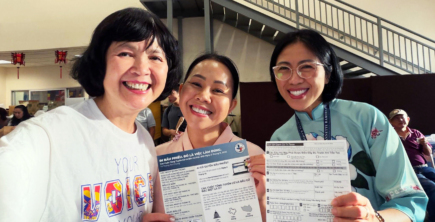
Photo credit (top image): BeLoved Asheville Hurricane Relief and Recovery (www.belovedasheville.com), a Tides Crisis Response Fund grantee partner
In today’s giving landscape, many donors and corporate social responsibility leaders are reimagining how to support grantees amid unpredictable challenges and persistent inequities. Supporting non-profit capacity building is an approach that drives meaningful impact and cultivates a responsive partnership. At Tides Foundation, this is one of the ways we collaborate with corporate partners and other donors to design more impactful grants that respond to real community needs. It’s more than a one-time investment — it’s about shifting power, building lasting resilience, and centering the voices and needs of the communities that the organizations serve.
What is Nonprofit Capacity Building?
Put simply, a nonprofit’s capacity is its ability to achieve its mission effectively. Whether it’s developing leadership skills, more efficient systems, or additional abilities to navigate new opportunities and uncertain landscapes — nonprofits that invest in strengthening their organization can more effectively serve their communities and adapt to change. By supporting their grantees’ capacity building, funders are supporting the organizations’ health, impact, and long-term sustainability.
Traditional funder-led capacity building can leave little room for nonprofit partners’ input or flexibility. However, with these three approaches, your support for nonprofit partners’ capacity building efforts can be transformative.
1. Make Capacity Building Non-Profit Led
Capacity building works best when nonprofits lead the way. Funders can start by asking partners what kind of support they need — then trust them to choose the tools, consultants, or training that will best help them achieve their goals.
Nonprofit leaders hold deep expertise about their services and strategies, and they know what they need to advance their missions. Funders seeking to support their nonprofit partners’ resilience should trust that wealth of knowledge instead of prescribing a particular approach. When nonprofit leaders are given agency to guide the process, new skills stick and resources go further, strengthening the organization for the long term.
2. Treat Grantmaking as Capacity Building
Grantmaking itself can be one of the most powerful ways to strengthen nonprofit organizations. Flexible, multi-year, or unrestricted funding gives grantees room to invest where it matters most — upgrading technology, improving operations, hiring experts for strategy shifts, or training staff to develop new skills.
Even project-based funders can help by inviting grantees to include these types of investments in their funding proposals. Ask what tools, trainings, or staff development opportunities would help increase their impact, and fund those initiatives. You can also raise indirect cost rates to help cover behind-the-scenes essentials — like the people in accounting, HR, and IT — who make community programs possible.
To go even further, consider creating a flexible fund for supplemental organizational health and capacity grants. All organizations face moments when they need to pivot and shift priorities; whether it’s to seize a time-sensitive opportunity or to address unexpected needs such as leadership transitions or staff burnout. Maintaining honest, trust-based relationships with grantees allows them to share their emerging needs openly, so your funding can support what truly matters to their health and sustainability.
3. Build Capacity in Community: A Cohort-Based Approach
When nonprofits come together as a cohort, it sparks collaboration, creativity, and shared momentum. By learning alongside peers, grantees exchange ideas, troubleshoot problems, and form networks that last well beyond the program.

Photo Credit: Ohio Organizing Campaign, a Tides Healthy Democracy grantee partner
The strongest cohort-based capacity building programs are designed BY nonprofits, not FOR them, through participatory and co-design processes. They center trust, mutual learning, and the expertise of community leaders. This approach makes trainings, workshops, and technical assistance more relevant and actionable because they’re grounded in the current and real interests of the cohort.
These connections strengthen not just individual organizations, but entire ecosystems — fueling broader networks and movements that create lasting change.
Supporting Movements Through Capacity Building: The Just Health Fund
A great example of these three strategies in practice is our recent work through the Tides’ Just Health Fund — a Tides Foundation grantmaking initiative that delivers critical resources to community leaders on the front lines of protecting, providing, and ensuring health equity for marginalized groups. Along with general support grants, Tides’ Just Health Fund offered grantee partners the opportunity to participate in a capacity-building cohort.
Ten of the grantee partners that work to advance health equity and reproductive justice across the Midwest and South signed up. Each operates at various intersections with different approaches — from direct service to policy change — creating an opportunity to not only learn new skills but to learn from one another, break down silos, and fortify a movement. At the heart of this program is community leadership, connection and shared learning while centering wellness as a foundational component of the cohort. Participants build new skills, anchor in wellbeing as a necessary part of resistance, and strengthen their civic engagement and organizing practices. The program was designed by listening to what partners said they needed most, leaving room to adapt as new challenges arise. With Tides as a supportive partner, cohort members are in charge — driving the direction and pace of the journey.
Get Started Supporting Nonprofits’ Organizational Capacity
Ultimately, capacity building is about organizational health and resilience — the solid foundation that allows nonprofits to shift power, sustain movements, and drive systems change. Whether strengthening one organization or a cohort of many, funders play a key role in helping nonprofits grow stronger for the long haul. The Tides Strategic Initiatives team can help you design an equity-driven, participatory program that fits your grantees’ goals and builds lasting impact.
This blog is the third in a series from Tides’ Strategic Initiatives team that explores ways to take your social impact strategy from transactional to transformational. Read the other blogs in the series below: